Iran has the attractions, the challenge is turning them into tourism: Javad Gharaei
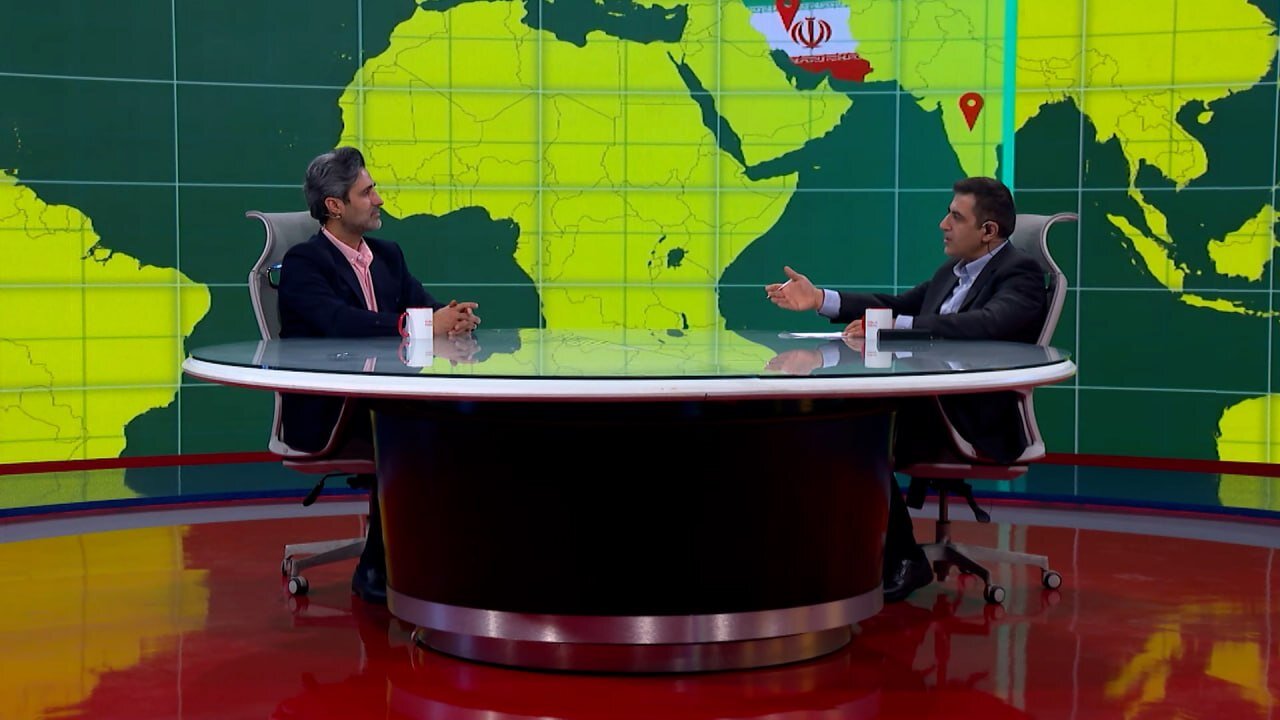
TEHRAN - Iran does not lack tourism attractions. What it has struggled to do, says Iranian traveler and documentary filmmaker Javad Gharaei, is turn the country’s extraordinary natural and cultural diversity into a tourism industry capable of attracting visitors, generating revenue and properly introducing the ancient country to the world.
After decades of traveling across Iran, from the Hyrcanian forests and Zagros Mountains to the Lut Desert and the Makran coast, Gharaei has seen a country where landscapes, climates, cultures and traditions can change dramatically within relatively short distances. He considers that diversity one of Iran’s greatest national assets, but an asset that remains underused.
For Gharaei, the challenge is not simply building more hotels, roads or other tourism infrastructure. Promotion, investment, education and infrastructure must advance together, he argues, while the authenticity of destinations must be protected from the pressures of tourism itself.
In a conversation with the Tehran Times on the Tehran Talks program, Gharaei reflects on more than two decades of travel and documentary-making, the tourism potential of Iran’s diverse landscapes and communities, the role of documentaries in putting little-known destinations on the map, and the need to develop tourism without destroying the very authenticity that makes places worth visiting.
Below is an edited selection of the interview:
Where did your fascination with Iran’s nature begin?
Well, I fell in love with nature when I was about 17 or 18. I began mountaineering in the mountains of Shemiran, in northern Tehran. Gradually, I moved on to other mountains and took mountaineering and skiing courses at different clubs.
The more I traveled through the mountains, the more I realized that there was much more than the peaks themselves. There were plains, deserts, valleys and completely different environments along the routes.
That was when I gradually became familiar with Iran’s extraordinary natural diversity.
Iran has almost all of the world’s major climates. Apart from tropical and polar climates, we have almost every major type of climate in one country.
And this climatic diversity has produced cultural diversity as well.
If the entire planet had one climate, cultures would probably be far more similar. But climate affects almost everything: architecture, food, clothing, music, customs, ceremonies, rituals, beliefs and even, to some extent, people’s ways of life and temperaments.
For me, this is one of the most fascinating things about Iran.
So your journey began with nature, but eventually took you toward culture and history as well?
Exactly. As I became familiar with different natural environments, I also encountered different ethnic groups and communities. That made me increasingly interested in Iran’s history and culture.
I began studying them more seriously and became fascinated by the depth of Iranian civilization.
Eventually, alongside my filmmaking education at the Iranian Youth Cinema Society, I studied tourism management at university. During my studies, I became even more interested in the enormous number and diversity of tourism attractions in Iran.
I began asking myself a very simple question: If we possess such an extraordinary range of attractions, why have we not made better use of them?
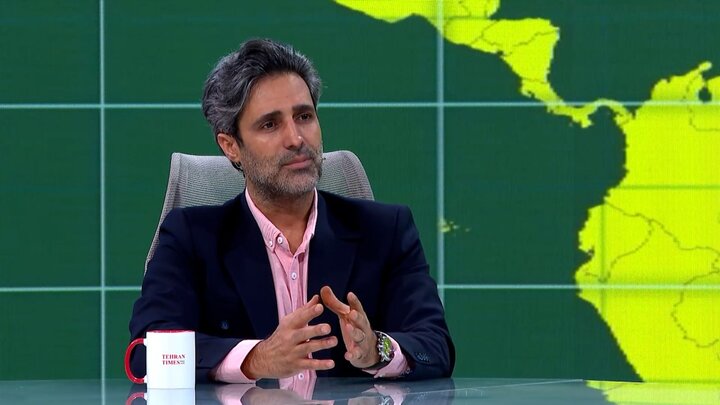
Iranian traveler and documentary filmmaker Javad Gharaei speaks to the Tehran Times at the newspaper’s studio.
Iran has not only natural attractions. We have ethnic and cultural diversity, history, architecture and a civilization that has developed over thousands of years.
In my view, these attractions are national assets, just as oil, gas, mineral resources, agricultural land and our territory are national assets.
Yet we have not used this particular asset as effectively as we could have.
We have not generated the foreign-exchange earnings that tourism could potentially provide, and we have not attracted the number of international visitors that a country with this level of diversity might expect.
That realization was one of the reasons I entered the tourism field.
I wanted to portray these attractions as well as I could, because of my love for Iran, for Iranian people and for the country’s civilization.
I also felt that some people inside the country, including some officials, had not fully recognized the importance of these attractions, either as things that need to be protected or as assets that can create economic opportunities and introduce Iran to the world.
You have described tourism attractions as a national asset. Why do you think Iran has struggled to turn that asset into a successful tourism industry?
One of the biggest weaknesses is that we have not properly introduced our attractions to the world.
For about eight years, I have been pursuing a project called Journey to the Land of Dreams. My objective has been to introduce Iran beyond its borders.
But the project has not yet come to fruition because, in my view, officials have not fully recognized the extent to which tourism can contribute to the country, economically, politically, culturally and even spiritually.
Think about the situation: a country with this geographical position, cultural diversity and history has still not been able to introduce itself to the world as effectively as it could.
That is one of the major weaknesses of our tourism industry.
You have emphasized promotion. But many people argue that Iran must first develop its tourism infrastructure before it can seriously compete with countries such as Turkey or Malaysia. Do you agree?
I think infrastructure, promotion, education and investment must develop together.
When I was studying tourism at university, I researched Malaysia. Malaysia has a very successful tourism industry, but in terms of the diversity of attractions, I believe Iran has a much greater range.
What happened in Malaysia was interesting. At first, officials focused heavily on infrastructure. They invested for years and developed very good infrastructure. But then they realized that tourists were still not arriving in sufficient numbers.
They understood that infrastructure alone was not enough. They also needed to advertise the country and introduce its attractions to the world.
I think we can learn from that experience.
Sometimes we say, “First we need infrastructure. Then, perhaps 10 years later, we can promote tourism.”
I do not think that is economically sensible.
Imagine spending billions of dollars over 10 years on infrastructure and only then beginning to expect revenue. Why not develop infrastructure while simultaneously promoting destinations, educating people and attracting investment?
We already have a certain level of infrastructure. We have hotels, hostels and inns. We have extremely hospitable people, which is a very important tourism asset.
We also have aviation infrastructure, although aviation has faced serious difficulties, including the attacks on passenger aircraft during the recent war.
The important point is that we should not wait for everything to become perfect before we begin.
Tourists themselves generate demand. Demand attracts investors. Investment creates more infrastructure.
You have a practical example of that process in Sistan-Baluchestan province.
Yes. Sistan-Baluchestan is a very good example.
In 2009, I went there and began producing my first documentary series in the region. I worked along the Makran (aka Makkoran) coast, from Gwatar Bay toward the borders of Sistan-Baluchestan and Hormozgan.
At that time, around 2010, Chabahar had only three hotels. Along the coastal strip there were essentially no hostels, eco-lodges or guesthouses. Those hotels were mainly used by a limited number of business travelers, and there were only one or two flights a week.
We produced several documentary segments and they were broadcast on television.
After the programs were broadcast, many tourists began traveling to the region.
Today, there are more than 15 four- and five-star hotels in Chabahar, and more than 150 eco-lodges along the coastal strip alone.
The change was remarkable.
What does that tell us?
Tourists bring investors. They create demand for infrastructure. They create demand for training and services.
If you promote a destination properly and bring people there, you can identify what is needed. Then government authorities, investors and local communities can respond.
Infrastructure can develop very quickly when there is real demand.
In that region, a great deal changed within two or three years.
So I believe tourism development is not as complicated as we sometimes make it.
You mentioned the extraordinary experience of moving between different climates. One place that illustrates this particularly well is Opert, on the border between Semnan and Mazandaran. What makes it special?
Opert is extraordinary because of the dramatic change that takes place within a very short distance.
It lies on the border between Semnan and Mazandaran. Imagine starting in a dry landscape, with little water and vegetation, and then moving toward the mountains.
At one point, the temperature below was around 35 degrees Celsius. I was traveling in short sleeves. That same night, it snowed in the higher elevations and the temperature fell to around minus 14 degrees.
That is a difference of roughly 45 degrees within a very small geographical area.
And the climatic change brings cultural and ecological changes with it.
As you travel, dialects change. Clothing changes. Food changes. Music changes. The landscape changes. You encounter different communities and different ways of life.
From the dry landscapes of Semnan, you can eventually look toward Mazandaran and see the dense Hyrcanian forests.
Within perhaps 30 kilometers, you can move from camels, saxaul and desert vegetation to snow-covered mountains and forested landscapes.
Further up, you enter habitats associated with species such as the Persian leopard, golden eagle and brown bear.
Every few dozen kilometers, it can feel as if you have entered a completely different world.
It can also be difficult.
On one trip, we planned to return the next day, but everything froze and became covered in snow. Our vehicles could not reach the higher elevations.
The Red Crescent came to our assistance and sent specialized vehicles. A journey that would normally have taken perhaps half an hour or an hour took about six hours.
So Iran’s diversity is not simply beautiful. Sometimes it is also physically demanding.
You have spent years documenting such places. What makes a tourism documentary successful? How can it encourage people to travel rather than simply watch?
The first requirement is honesty.
A documentary should be something people can rely on. It should not create a false picture.
Of course, we should show beauty. But we should also show challenges, opportunities and realities.
The audience should see different dimensions of the place, person or subject and then make an informed decision.
That is particularly important in tourism documentaries.
Let me give you an example.
I once visited a village in Sistan-Baluchestan, between Zahedan and Chabahar, where people were living in a very traditional way.
Their houses were handmade from the branches and leaves of a wild date palm found in the region.
There was no electricity. They obtained water from a mountain spring. When I arrived, I felt as though I had gone back hundreds of years.
Someone else might have looked at the same place and said, “How difficult and terrible these people’s lives are.”
But I did not see it that way.
I saw an extraordinary example of adaptation and traditional knowledge.
The people had preserved handmade architecture over generations. The women wore clothing with elaborate handmade embroidery. They had developed ways of coping with their environment without modern technology.
They even had what you might call a handmade refrigerator.
They dug a hole about a meter deep, lined it with palm fibers and leaves, kept the material wet and placed food inside. In an environment where the outside temperature could reach around 40 degrees Celsius, this simple system kept food considerably cooler.
When I arrived, a wedding ceremony was taking place. Families had gathered and were celebrating.
For me, this was not simply a story about poverty or a lack of modern facilities. It was a story about authenticity, traditional knowledge and a way of life that had survived for generations.
And that authenticity itself has value.
What happened after the documentary was broadcast?
Something very interesting happened.
After the film was published on YouTube and elsewhere, tourists from Finland, Japan, China and several European countries visited the area.
The local headman later sent me a photograph of his son. He had gone to a place where there was mobile reception and contacted me through WhatsApp. He told me that foreign tourists had come because of the film.
The journey was not easy. The area could be reached only by motorcycle, horseback or on foot. Visitors had to travel for two or three hours through the mountains.
Interestingly, the local governor once asked me, “Where did you find this place?” Even he had never been there.
That experience showed me the power of documentary filmmaking.
A film can introduce a place that even local officials may not know well.
But it also raises an important question: What happens to authenticity when tourists begin arriving?
Exactly. If tourism brings visitors to pristine communities, how do we make sure that the very authenticity attracting those visitors is not destroyed?
That is where the concept of authenticity becomes extremely important.
In my view, countries that want to succeed in tourism must preserve their authenticity.
Much of the modern world has become similar. People in different countries have access to similar hotels, shopping malls, restaurants, hospitals, parks and entertainment.
People do not necessarily travel thousands of kilometers simply to see things they can find at home.
They want to see something that does not exist in their own environment.
That is why Iran’s traditional lifestyles, cultural diversity and ancient heritage are so valuable.
But these authentic elements are becoming weaker or disappearing.
If we want tourism to succeed, we have to protect them.
We must respect authenticity, preserve it and present it carefully to visitors.
At the same time, we have to understand carrying capacity.
Every attraction and every destination has a limit.
Before developing tourism, we should understand the attraction, understand its sensitivity and learn how to manage it.
Then we must protect it.
If we ignore carrying capacity, large numbers of tourists can damage natural, historical, rural and ethnographic attractions.
This is not only about foreign tourists. It also applies to domestic tourism.
I also went to Shirz Valley in Lorestan and introduced it through my work. It is an extraordinary and spectacular valley, particularly at certain times of the year.
Local people had already been visiting, but there were environmental problems, including litter.
I tried to raise awareness about those problems.
The important point is that carrying capacity does not depend on nationality.
An Iranian tourist can damage an attraction just as a foreign tourist can.
The question is whether visitors understand how to use a destination responsibly.
We should not allow mass tourism to destroy local communities, nature or heritage.
If I ask you to choose just one Iranian landscape that has impressed you more than all the others, what would you choose?
I cannot choose only one.
I have traveled abroad, and I have deliberately tried not to let patriotic feelings influence my judgment. I wanted to compare things rationally.
And when I did that, I still reached the conclusion that Iran is genuinely unique in many respects.
Take the Hyrcanian forests.
These ancient forests stretch across Gilan, Mazandaran and Golestan and continue toward the border with Azerbaijan. They are among the world’s ancient forest ecosystems and have been recognized on the UNESCO World Heritage List.
Then there is the Lut Desert, which is also a World Heritage site.
When I first entered the Lut about 17 years ago, I did not imagine that a desert could be so fascinating.
People sometimes say the desert is fascinating because of its silence.
For me, it was more than silence.
There are no trees, rivers or mountains in the way you normally experience them. There may be almost no vegetation. But the absence itself becomes beautiful.
The curved lines of the land disappear into the horizon. At sunrise and sunset, the colors can change dramatically.
And then there is the night sky.
When you stand in the desert at night, you can see an extraordinary number of stars. They seem incredibly close.
Because of light pollution, this experience has become increasingly rare around the world.
The night sky is itself an environmental asset, and light pollution is a growing problem. As cities and villages expand, we lose the natural darkness required to see the stars.
I have even produced a multi-part documentary about the Lut.
And beyond the forests and deserts?
The Zagros is another extraordinary world.
When you enter the Zagros, you encounter oak forests, nomadic communities and the cultures of the Lurs, Qashqai and Kurds.
The mountain range stretches across a huge part of western and southern Iran, from Kurdistan through Lorestan and Fars toward Bushehr and Hormozgan.
It is rugged and sometimes difficult, but I love it very much.
Then there is Iran’s southern coastline.
In parts of Bushehr and Hormozgan, you travel through mountainous landscapes and suddenly look down into deep valleys extending toward the Persian Gulf.
Further east, you reach the Makran coast and the Sea of Oman.
There are blue waters, golden beaches and sand dunes beside the sea.
In parts of Sistan-Baluchestan, you can see sand dunes almost next to the sea, with palm groves between them.
Such combinations are rare.
You can find comparable landscapes in parts of Namibia, Chile and some Arab countries, but Iran has its own version of this extraordinary combination.
That is why I say that almost every part of Iran has something unique.
You have spoken at length about Iran’s beauty. But your documentaries also address environmental and social problems. How important is it for a filmmaker to show those problems?
It is essential. A documentary filmmaker must be honest and deeply committed to the work.
Over roughly 20 years, I believe I have produced around 140 documentary episodes. My focus has been Iran, its beauty and attractions, but also its challenges and problems.
In almost every program, alongside the beauty, I have tried to show problems affecting the environment, nature or local communities.
But I do not want simply to point at a problem.
Where possible, I consult scientists and specialists and try to present solutions.
I want the presence of the documentary team to have a positive effect.
In many places where we documented problems, those problems were later addressed or improved.
That is very important to me.
A documentary should not merely observe a problem. If possible, it should help people understand it and encourage a solution.
Today, however, audiences are increasingly consuming very short content on Instagram and other social-media platforms. Younger people may not sit through a long documentary. Does this mean documentaries themselves have to become shorter?
What you have described is a serious problem.
Very short content cannot go deeply into an issue.
It cannot adequately explore a complex environmental, historical, political or social question.
Social media has encouraged people to seek faster and shorter content. As a result, patience has declined, and people can become superficial in the way they approach complex subjects.
Someone hears one sentence and immediately reaches a conclusion.
That is dangerous.
At the same time, I do not completely agree that people will no longer watch long-form content.
Look at cinema. Films can last one, two or even three hours, and people still watch them.
Television and streaming series can contain dozens of episodes, each lasting 45 or 50 minutes, and audiences continue to follow them.
So we have to find a balance.
Personally, I think documentaries generally should not be longer than around 40 or 45 minutes.
Within that time, we should tell the story properly and bring it to a conclusion.
But the rhythm has to be engaging.
We need to understand today’s audience and make programs that move at an appropriate pace.
What we must not do, however, is sacrifice depth simply because the audience has become accustomed to superficial content.
If we completely adapt ourselves to superficial thinking, we will have betrayed our responsibility to society and future generations.
We should make documentaries more engaging, but we should not reduce the depth of research, investigation and writing.
Instead of following the audience into superficiality, we should try to take the audience toward greater depth.
If you put on your critical glasses and compare your documentaries with international productions, what would you change if you had the opportunity to make them again?
I would certainly change things.
But many of the things I would change are connected to the conditions under which we work.
My biggest limitations are time and budget.
Let me give you an example.
There was a BBC documentary, I believe the title was something like ‘human and nature”, although I may not remember the exact title, that consisted of eight episodes of around 50 minutes each.
According to what I remember, they spent about five years producing it. They had a strong team and a budget of more than $25 million.
Do we have such conditions in Iran?
We do not even have one-tenth of those resources.
If I were given a year and a half or two years to produce 26 one-hour episodes, I would do it.
That is roughly the kind of time I am usually given for such work.
But if you told me, “You have five years to make eight highly professional documentary episodes,” I would still need a budget that is not normally available.
So my two major problems are time and budget.
We have equipment. We have facilities. We have professional and highly skilled crews. We have extraordinary attractions and infrastructure.
But we do not have enough time and money to produce at the level I would like.
Much of the criticism I have of my own work comes back to those limitations.
What are the physical challenges of documentary production?
There are many, far more than people see on television.
And limited budgets make those challenges even greater.
I remember hearing about one of Sir David Attenborough’s productions in Africa. Several vehicles belonging to his team became stuck in mud, and the crew spent one or two hours trying to get them out.
He said the British Army supported their productions in different parts of the world so that they could complete their work under difficult circumstances.
We do not have that kind of support.
Wherever we go, it is essentially just us.
Imagine producing documentaries across a country as geographically diverse as Iran, with deserts, high mountains, forests, remote villages, snow, extreme heat and difficult roads, and doing it with limited resources.
The challenges are enormous.
But we love Iran.
That love is one of the reasons we continue.
We have tried, despite all these difficulties, to maintain international professional standards.
I am not saying that we have produced perfect or extraordinary programs every time.
I am saying that we have tried to stay within professional standards and not compromise the fundamental principles of documentary filmmaking.
Maintaining those standards under difficult circumstances, in such a vast country with such extraordinary climatic diversity, is not easy.
AM
Leave a Comment